Estimating software
Choosing Flooring Estimating Software
A flooring contractor's practical guide to choosing estimating software that handles takeoffs, waste, labor, margin, and proposals.
I spent years watching good flooring estimates get slowed down by disconnected measurements, price sheets, and proposal documents. This is what I would evaluate before choosing software.
Start with your actual workflow
I would not begin with a feature checklist. Start with the way your team moves from the first site visit to a signed proposal. Write down every handoff, repeated entry, spreadsheet, and place where job details disappear. The right estimating software should reduce those steps without forcing your company into a generic construction process.
Test the takeoff process
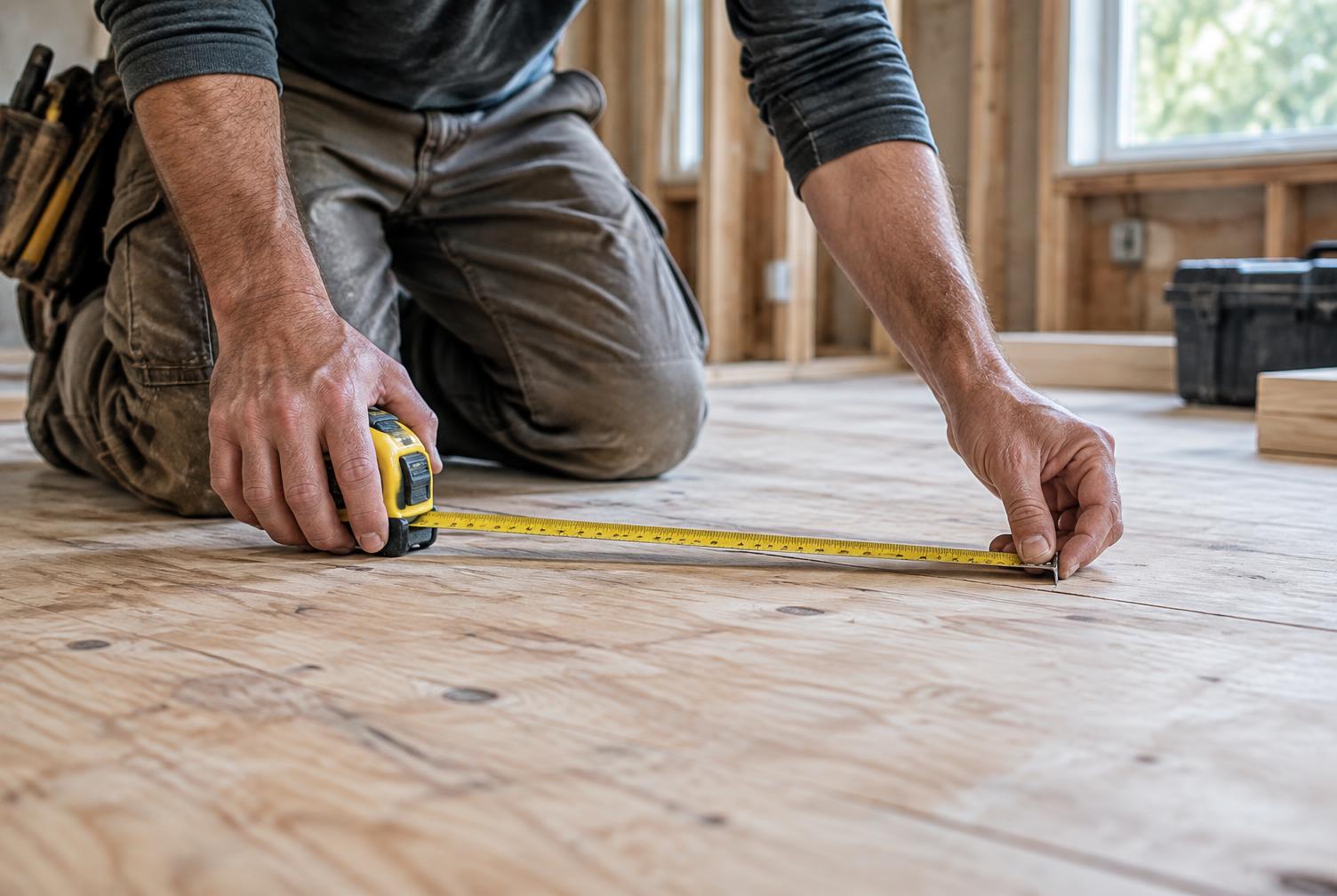
Measure a real multi-room project during the trial. Include closets, transitions, stairs, different materials, and irregular walls. Check whether each dimension stays connected to the right room and whether the total updates when something changes. If the takeoff still requires a second worksheet, the software has not solved the core problem.
Look closely at pricing
Useful flooring estimating software should handle material cost, selling price, labor, waste, prep, delivery, disposal, tax, and small accessories. I also want to see gross profit and gross margin before sending anything. A polished total is not enough when the estimator cannot see whether the job is actually worth doing.
Check how products are managed
Flooring companies quote many products with changing supplier costs, carton sizes, colors, and installation requirements. Add several products your team sells every week. Confirm that the system can organize them clearly and update pricing without rebuilding every estimate. A dependable product library should make the next quote faster and more consistent.
Judge the finished proposal
The estimate is internal work. The proposal is what the customer experiences. Review it on a phone and ask whether the scope, material, options, total, terms, and signature path are easy to understand. Good software should turn the estimate into a professional proposal without copying the same information into another tool.
Make the decision with your team
Let an owner, estimator, salesperson, and office team member run the same sample job. Track the time each person spends and the questions they still need to ask. Choose the system that makes the full process clearer, not the one with the longest list of features.
My practical recommendation
Use one of your real projects when you evaluate a new process. The right system should reduce repeated work, protect pricing, and make the next step clear for your team and customer.
About the author
Luca Schuhardt founded Proposal Genie after years in the flooring industry. He writes about the estimating and proposal problems contractors handle every day.